
Who We Are
Our History
Evergreen Bible Chapel began in May 2016 with a small group of Christians desired to plant a church in the Smiths Falls area that was reformed, exegetical, and biblical in its preaching and practices. It would also be a church that was missional focused, unashamed to preach the full council of God’s Word, emphasize the importance of the family, and accessible to all people. Tim Tysoe served as the first pastor of Evergreen.
Over the next few years the Lord worked mightily to draw people to Christ and the church grew from around 10 people to a congregation of around 50-75 attendees. The church joined the Fellowship of Evangelical Baptists (FEB), a conservative Baptist Denomination in Canada, as a church plant in February 2019.
Throughout the challenges through the years, the Lord was faithful to His church. Covid presented difficulties for the church as not owning a building meant finding a meeting place was more challenging yet in the Lord’s good providence, He always provided and the church continued to meet, minster, and grow.
The church now meets primarily at the Smiths Falls High school. In May 2022 pastor Lucas Nosal and his family moved to the area to assume the role as pastor at Evergreen. Holding firm to the biblical convictions on which it was founded, Evergreen is filled with men, women and children from all walks of life, seeking to honour God, proclaim the Lordship of Christ in all areas of life, love broken and hurting people, foster close community and fellowship, and glorify God in Smiths Falls and the surrounding area by the grace of God!

Our Beliefs
Evergreen Bible Chapel is an Evangelical Reformed Baptist Church. We are committed to serving the Lord Jesus Christ as He is the founder and perfecter of our faith, the Head of the church, and it is our greatest desire to honour Him in all things.
We desire to submit to the authority of Scripture in all areas of life and doctrine, believing that “all Scripture is breathed out by God and profitable for teaching, for reproof, for correction, and for training in righteousness, that the man of God may be complete, equipped for every good work.” (2 Tim 3:16-17)
Statement of Faith
Part 1: Key Doctrines of the Church
THE SCRIPTURES
We believe that God has inspired the words preserved in the Scriptures (the sixty-six books of the Old and New Testaments), which are his special revelation to humanity and are the means of his saving work in the world (2 Peter 1:20-21, 3:15-16; 2 Timothy 3:16-17; Acts 1:16; Hebrews 3:7; James 1:21). These writings alone constitute the verbally inspired Word of God, which is utterly authoritative and without error in the original writings, complete in its revelation of his will for salvation, sufficient for all that God requires us to believe and do, and final in its authority over every domain of knowledge to which it speaks (Psalm 19:7, 119:160; John 17:17; 2 Peter 1:19-21; Luke 16:31; John 20:21; James 1:22; Proverbs 30:5-6).
We confess that both our finitude and our sinfulness preclude the possibility of knowing God’s truth exhaustively, but we affirm that, enlightened by the Spirit of God, believers can know God’s revealed truth truly (Romans 11:33; 1 Corinthians 2:10-14). The Bible is to be believed, as God’s instruction, in all that it teaches. It is to be obeyed as God’s command in all that it requires and trusted, as God’s pledge, in all that it promises (1 Corinthians 10:11; Luke 8:21; Hebrews 10:23). As God’s people hear, believe, and obey the Word, they are equipped as disciples of Christ and witnesses to the gospel (1 Thessalonians 2:13; 2 Timothy 3:16-17).
THE TRIUNE GOD
We believe in one God, eternally existing in three equally divine Persons: the Father, the Son, and the Holy Spirit, who know, love, and glorify one another (Isaiah 45:5; John 1:18; Colossians 2:9; John 5:18; Acts 5:3-4; John 16:13-15). This one true and living God is infinitely perfect both in His love and in His holiness (1 John 4:16; Psalm 18:30). He is the Creator of all things, visible and invisible, and is therefore worthy to receive all glory and adoration (Hebrews 11:3). Immortal and eternal, he perfectly and exhaustively knows the end from the beginning, sustains and sovereignly rules over all things, and providentially brings about his eternal good purposes to redeem a people for himself and restore his fallen creation, to the praise of his glorious grace (Isaiah 46:9-10; Hebrews 1:3; Titus 2:11-14; Revelation 7:10).
JESUS CHRIST
We believe in the absolute and essential deity of Jesus Christ and that he is the second Person of the Trinity (Isaiah 9:6; John 1:1, 5:18; Colossians 2:9; Hebrews 1:8-9). We also believe in his eternal existence with the Father in pre-incarnate glory (John 1:3, 17:5), in his virgin birth (Luke 1:26-38), sinless life (Hebrews 4:15), substitutionary death (Isaiah 53:4-6; Romans 5:8), bodily resurrection (John 20:19-29; 1 Corinthians 15:3-9), triumphant ascension (Luke 24:50-51), mediatorial ministry (1 Timothy 2:5; Hebrews 9:5), and personal return (John 14:3; Acts 1:11; Revelation 22:20). Jesus is Lord and Saviour (Psalm 110:1; Luke 2:11; Acts 5:31; 2 Peter 1:11). The Law, Prophets, and Psalms all point towards him as the fulfillment of the plan and salvation of God (Luke 24:27, 44; Colossians 2:17; Hebrews 8:5-13).
THE HOLY SPIRIT
We believe in the absolute and essential deity and Personhood of the Holy Spirit (Acts 5:3-4; Matthew 28:19; Romans 8:27; 1 Corinthians 2:10-11). He convicts of sin, of righteousness and of judgement (John 16:8-9), regenerates (Romans 2:29, 8:11), sanctifies (Romans 7:6, 15:16), illuminates (John 14:26), empowers (Acts 1:8; Romans 15:19; 1 Corinthians 12:4-7), and comforts those who believe in Jesus Christ (John 16:7; Romans 8:16, 26).
THE CREATION OF HUMAN BEINGS
We believe that God created human beings, male and female, in his own image (Genesis 1:25, 5:1). Adam and Eve belonged to the created order that God himself declared to be very good, serving as God’s agents to care for, manage, and govern creation, living in holy and devoted fellowship with their Maker (Genesis 1:26-31). All human beings bear the image of God, and therefore are to be treated with dignity and respect from the moment of conception to the very end of their life.
THE FALL OF MAN
We believe that Adam, made in the image of God, distorted that image and forfeited his original blessedness —for himself and all his progeny—by falling into sin through Satan’s temptation (Genesis 1:27, Genesis 3). As a result, all human beings are alienated from God, corrupted in every aspect of their being (physically, mentally, volitionally, emotionally, spiritually), and condemned finally and irrevocably to death (physical, spiritual and eternal)— apart from God’s own gracious intervention (Romans 3:23, 6:23). The supreme need of all human beings is to be reconciled to God under whose just and holy wrath we stand; the only hope of all human beings is the undeserved love, grace, and mercy of this same God, who alone can rescue and restore us to himself through Jesus Christ’s substitutionary atonement (Romans 5:1-11; 1 John 2:2; Revelation 20:11-15).
SALVATION AND THE PLAN OF GOD
We believe that from all eternity God determined, in grace, to save a great multitude of guilty sinners from every tribe, language, people and nation, and to this end foreknew them and chose them according to his sovereign will (Romans 8:28-29; Ephesians 1:11-12; Revelation 5:9-10). We believe that God justifies and sanctifies those who have place their faith in Jesus, and that he will one day glorify them—all to the praise of his glorious grace (Ephesians 2:1-10; Romans 3:21-26; Hebrews 10:10-14; Revelation 7:9-12). In love, God commands and implores all people to repent and believe (Mark 1:14-15; 2 Peter 3:9), having set his saving love on those he has chosen and having ordained Christ to be their Redeemer (John 6:37-40, Acts 13:8, Romans 8:29-30).
THE REDEMPTION OF CHRIST
We believe that, moved by love and in obedience to his Father, the eternal Son became human; the Word became flesh, fully God and fully human being, one Person in two natures (John 4:31-34; Hebrews 1:8, 13:8; John 1:14; Titus 2:13; 1 John 5:20; Hebrews 2:17, 4:15). The man Jesus, the promised Messiah of Israel, was conceived through the miraculous agency of the Holy Spirit, and was born of the virgin Mary (2 Samuel 7:13; Isaiah 7:14, 11:1, 53:5; Luke 1:27-35). He perfectly obeyed his heavenly Father, lived a sinless life, performed miraculous signs, was crucified under Pontius Pilate, arose bodily from the dead on the third day, and ascended into heaven (1 Peter 2:22; John 9:1-34; Matthew 8:23-27; Matthew 27:11-58; John 20:25-27; Luke 24:39-43; 1 Corinthians 15:3-4; Acts 1:2-3; Ephesians 4:10). As the Mediator King, he is seated at the right hand of God the Father, exercising in heaven and on earth all of God’s sovereignty, and is our High Priest and righteous Advocate (1 Timothy 2:5; Ephesians 1:20, 2:6; Jude 1:4; Hebrews 3:1; 1 John 2:1).
THE JUSTIFICATION OF SINNERS
We believe that Christ, by his obedience and death, fully discharged the debt of all those who are justified (Philippians 2:8; Colossians 2:13-14). By his sacrifice, he bore in our stead the punishment due for our sins, making a proper, real, and full satisfaction to God’s justice on our behalf (Isaiah 53:5; 2 Corinthians 5:21). By his perfect obedience, he satisfied the just demands of God on our behalf, since by faith alone that perfect obedience is credited to all who trust in Christ alone for their acceptance with God (Romans 5:21; Ephesians 2:8). Inasmuch as Christ was given by the Father for us, and his obedience and punishment were accepted in place of our own, freely and not for anything in us, this justification is solely of free grace, in order that both the exact justice and the rich grace of God might be glorified in the justification of sinners (Isaiah 53:6,10; John 10:18; Ephesians 2:8; Romans 5:1-2). We believe that a zeal for personal and public obedience flows from this free justification (Titus 3:5-8; Ephesians 2:8-10).
THE POWER OF THE HOLY SPIRIT
We believe that this salvation, attested in all Scripture and secured by Jesus Christ, is applied to his people by the Holy Spirit (Ezekiel 36:26-27; John 3:8). Sent by the Father and the Son, the Holy Spirit glorifies the Lord Jesus Christ, and is present with and in believers (John 14:26, 15:26, 16:14, 14:16-17). He convicts the world of sin, righteousness, and judgment, and by his powerful and mysterious work regenerates spiritually dead sinners, awakening them to repentance and faith, baptizing them into union with the Lord Jesus, such that they are justified before God by grace alone through faith alone in Jesus Christ alone (John 16:18, 3:8; Acts 16:14; 1 John 5:1; 1 Corinthians 12:13; Romans 3:23-25). By the Spirit’s agency, believers are renewed, sanctified, and adopted into God’s family; they participate in the divine nature and receive his sovereignly distributed gifts (Titus 3:5; 1 Peter 1:2; Romans 8:14-15; 1 Corinthians 12:7). The Holy Spirit is himself the down payment of the promised inheritance, and in this age indwells, guides, instructs, equips, revives, and empowers believers for Christ-like living and service (Ephesians 1:14; Romans 8:12; John 16:13; John 14:26; 1 Corinthians 12:11; John 6:63; Acts 1:8).
SANCTIFICATION OF BELIEVERS
We believe that those who have been saved by the grace of God through union with Christ by faith and through regeneration by the Holy Spirit enter the kingdom of God and delight in the blessings of the New Covenant: the forgiveness of sins, the inward transformation that awakens a desire to glorify, trust, and obey God, and the prospect of the glory yet to be revealed (Colossians 1:13-14; 2 Corinthians 3:18). Good works constitute indispensable evidence of saving grace (Ephesians 2:8-10). Living as salt in a world that is decaying and light in a world that is dark, believers shouldn’t withdraw into seclusion from the world, or become indistinguishable from it; rather we are to do good to the community, for all the glory and honour of the nations is to be offered up to the living God (Matthew 5:13-16; John 17:16-18; Jeremiah 29:7; Revelation 21:24-27). Recognizing whose created order this is, and because we are citizens of God’s kingdom, we are to love our neighbours as ourselves, doing good to all, especially to those who belong to the household of God (John 18:36; Matthew 22:39; Romans 12:16-18; Galatians 6:10). Sanctification is a progressive work that began at regeneration and will be carried on in the heart of believers by the power of the Spirit, until the believer is with Christ (Romans 12:2; 2 Corinthians 3:17-18).
THE CHURCH
We believe that God, through Jesus’ death and resurrection, has redeemed for himself a holy and special people who are made the children of God by faith (John 1:12-23; Galatians 3:25-29; 1 Peter 2:9-10). All people, in all places, throughout all of time, who have been justified before the Lord, are considered part of this new people, referred to as the church (John 10:14-16; Ephesians 5:25). The universal church (all who are justified by Christ) is manifest in local churches of which Christ is the only Head; thus each local church is, in fact, the church, the household of God, the assembly of the living God, and the pillar and foundation of the truth (Ephesians 1:22, 5:23; Colossians 1:18; Ephesians 2:19-22; 1 Timothy 3:14-16). The church is the body of Christ, the apple of his eye, graven on his hands, and he has pledged himself to her forever (1 Corinthians 12; Romans 12:3-5; Psalm 17:8; Isaiah 49:6). The church, Christ’s bride, is distinguished by her gospel message, sacred ordinances, discipline, great mission, and, above all, her love for God, one another and for the world (Matthew 28:19; 1 Corinthians 11:17-34; Matthew 18; Galatians 6:1-5; Matthew 28:16-20; Mark 12:31; Galatians 6:10).
BAPTISM AND THE LORD’S SUPPER
We believe that baptism and the Lord’s Supper are ordained by the Lord Jesus himself and reserved for believers in Christ (Acts 2:38, 4:12, 8:12; Matthew 3:13-15, 28:19; 1 Corinthians 11:23-32). Baptism symbolizes our union with Christ’s death and resurrection and our death to the old self (Romans 6:3-4). It is an external symbol of an internal reality; namely that the old self has perished and we have been raised to new life through the promise of the New Covenant (Jeremiah 31:31-34; Ezekiel 36:25-27). It also serves as a means of entrance into the New Covenant community, in which the believer publically identifies themselves with Christ and His bride, the church (Matthew 28:19-20; Acts 2:41, 19:1-6; Colossians 2:12). We believe that baptism is most biblically carried out when done by full immersion, only on professing believers in Christ.
The Lord’s supper serves as a reminder of the New Covenant, by which we have been purchased (1 Corinthians 11:23-25). Likewise, it is a symbol, representing the body and blood of Jesus Christ, who has purchased us and brought us into the New Covenant (Luke 22:20). It is meant to nourish us in our walk with the Lord, cause us to examine our lifestyle, point us towards his future coming, and lead us to rejoicing in our great God and Saviour. The Lord’s supper is reserved solely for believers who are to take it in a worthy manner (1 Corinthians 11:27-30).
THE RETURN, JUDGEMENT, AND CONSUMMATION OF CHRIST
We believe in the personal, glorious, and bodily return of our Lord Jesus Christ with his holy angels, when he will exercise his role as final Judge, and his kingdom will be consummated (1 Thessalonians 4:16; Revelation 1:7; James 5:7-9; Matthew 25:31-46; 2 Timothy 4:1). We believe in the bodily resurrection of both the unjust and the just—the unjust to judgement and eternal conscious punishment in hell, as our Lord himself taught, and the just to eternal blessedness in the presence of the Lamb and him who sits on the throne, in the new heavens and the new earth, the home of righteousness (Revelation 20:12; Romans 2:5-7, 14:10, 12; 7:17; 2 Corinthians 5:10; Matthew 25:30, 46; Revelation 14:9-11, 22:3; 2 Peter 3:11-13). On that day, the Church will be presented faultless before God by the obedience, suffering, and triumph of Christ, all sin will be purged and its wretched effects forever banished (Hebrews 2:10; Ephesians 5:25-27; Revelation 19:6-9). God will be all in all and his people will be enthralled by the immediacy of his ineffable holiness, and everything will be to the praise of his glorious grace (Jude 1:24; Revelation 21:3-4, 23, 22:4).
Part 2: Additional Doctrinal Distinctives
MARRIAGE AND GENDER ROLES
We believe that men and women are equal image bearers of God (Genesis 1:26, 5:1), who have equal access to the message of the gospel, equally share in all the benefits of salvation, and are heirs together of the grace of life (Galatians 3:26-28; Ephesians 1:3-14; 1 Peter 3:7). Yet, the Bible is also clear that there are differences between men and women. In God’s wise purposes, men and women are not simply interchangeable, but rather they complement each other in mutually enriching ways. Adam and Eve were made to complement each other in a one-flesh union that establishes the only normative pattern of sexual relations and ultimately models the union between Christ and his church (Genesis 2:21-24; Romans 1:26-28; Matthew 19:3-9). God ordains that they assume distinctive roles which reflect the loving relationship between Christ and the church, the husband exercising headship in a way that displays the caring, sacrificial love of Christ, and the wife submitting to her husband in a way that models the love of the church for her Lord (1 Corinthians 11:3; Ephesians 5:22-33).
In the ministry of the church, both men and women are encouraged to serve Christ, use the gifts God has given them, and to be developed to their full potential in the manifold ministries of the people of God. However, the Pastor/Elder role within the church is given only to qualified men and is grounded in creation, fall, and redemption and must not be sidelined by appeals to cultural developments (1 Timothy 2:12-14, 3:2-7).
The church has incorporated the Nashville Statement on Sexuality into our church Constitution. For more information on what we affirm concerning gender and roles, see https://cbmw.org/wp-content/uploads/2017/08/The-Nashville-Statement.pdf
REFORMED THEOLOGY
In terms of soteriology (doctrine of salvation), we hold to a Reformed (Calvinistic) view of the sovereignty of God in salvation. We believe that the Bible teaches what is commonly known as the Five Points of Calvinism: Total Depravity, Unconditional Election, Limited Atonement, Irresistible Grace, and the Perseverance of the Saints.
- Total Depravity – Because of the fall, mankind in his natural condition, apart from any work of grace, is guilty before God, hostile to God and whatever is good, inclined only toward evil continually, spiritually dead and unable to save himself. Sin has so affected every part of humanity (physically, mentally, volitionally, emotionally, spiritually) that we cannot and will not, by nature, turn from sin and believe in Christ to be saved. Rather, man will exercise his will in rebellion against God and the pursuit of sin (Genesis 2:15-17, 6:5; Psalm 51:5; Jeremiah 17:9; John 6:44; Romans 3:10-18, 5:12, 7:18, 8:7-8; 1 Corinthians 2:14; Ephesians 2:1-10).
- Unconditional Election – Election refers to God’s choosing of certain individuals unto salvation before the foundation of the world. This choice is unconditional and is not based on any merit in the sinner, or any foreseen response from the sinner, but rests only in the sovereign wisdom and good pleasure of God. Repentance and faith are the result of election, not the cause of election. Apart from the election of grace, none would be saved and none would seek after God (John 1:13, 10:26; Acts 11:18, 13:48; Romans 8:29-30, 9:10-21; Ephesians 1:4-11, 2:4-10).
- Limited Atonement – The doctrine of limited atonement (also known as definite atonement, or particular redemption) addresses the extent of Christ’s atoning work on the cross. It answers the question: For whom did Christ die? Christ’s death was not general, but particular and definite in its aim. Christ died for the elect. He died for his bride, the Church. His death accomplished all that was necessary to secure the everlasting salvation of his people. Christ’s death on the cross cancels the debt of their sin, satisfies the holy wrath of God, and wins for his people all the benefits of salvation, including the gifts of repentance, faith and new life by the Spirit (Isaiah 53:11-12; Matthew 1:21, 26:28; Mark 10:45; John 10:11-30, 17:6-12; Acts 20:28; Romans 3:21-16, 8:28-30, 32; Ephesians 2:8-10, 5:25; Titus 2:14, 3:5-6; Hebrews 9:28; 1 Peter 2:24; Revelation 5:9).
- Irresistible Grace – Because mankind is spiritually dead in sin, only a sovereign work of God can overcome man’s rebellion against God and bring him to faith in Christ. Irresistible grace refers to the special inward work of God the Holy Spirit, whereby a sinner is made spiritually alive and given the gifts of repentance and faith in the Lord Jesus Christ. God’s sovereign work of grace can and will overcome all resistance when he wills to draw his elect to saving faith in Jesus Christ (John 1:12-13, 3:1-8, 6:37, 44, 64-65, 10:27; Acts 16:14; Romans 8:28-30; 1 Corinthians 1:23-24; 2 Corinthians 4:4-6; Ephesians 2:8-10; 2 Timothy 2:24-25).
- Perseverance of the Saints – All those chosen by God before time, redeemed by Christ, effectually called by God to faith in Christ and given new life in the Spirit, will be saved. This is not simply a matter of eternal security, although we have eternal security by faith in Christ. Scripture teaches that the saints will be kept in persevering faith and the obedience of faith, by the power of God to the end. The fruit of conversion will be evident in their lives, though not without remaining sin (Mark 13:13; John 8:31, 10:26-30; Romans 8:13, 28-30, 35-39; 1 Corinthians 15:1-2; Ephesians 1:13-14; Philippians 1:6, 2:13-14; Colossians 1:21-23; 2 Timothy 2:11-12; Hebrews 12:14; 2 Peter 1:10; 1 John 2:3-6; Jude 24-25; Revelation 2:7, 10, 11, 17, 25, 26, 3:5, 11, 12, 21).
THE BELIEVER AND THE SPIRIT
We believe that all Christians are indwelled with the Holy Spirit of God at the moment they are justified by faith and enter into a relationship with Jesus. The Scripture refers to this indwelling as a baptism, saying that Jesus himself baptizes all Christians with the Holy Spirit. We believe that the Holy Spirit then indwells believers permanently. This is in contrast to one Christian view that teaches a second baptism of the Spirit, after conversion. This second blessing is not taught in the Bible (Matthew 3:11, Acts 1:5, 1 Corinthians 12:13, Ephesians 5:18, Acts 4:8). Scripture commands Christians to continue “being filled with the Spirit” (Ephesians 5:18), “walking by the Spirit” (Galatians 5:16), and “earnestly desiring the spiritual gifts” (1 Corinthians 14:1), all of which acknowledge that the Spirit is still active in believers and that we should seek his power in our lives for the building up of Christ’s Church (1 Corinthians 12:7, 14:26; 1 Peter 4:10). We are to avoid “quenching the Spirit” (1 Thessalonians 5:19), so as to enjoy enhanced comfort and ministry of the Spirit. We reject many of the so-called “manifestations” of the Spirit seen in certain Christian circles (e.g., barking, or howling like animals, falling down and rolling on the floor). Any expression of the gifts must be in an orderly manner and in accordance with God’s revealed Word (1 Corinthians 14:33).
CHURCH GOVERNMENT
We believe that the biblical model for church leadership/government is elder-led congregationalism. The Bible teaches that the church is to be ruled, overseen, shepherded, and pastored by biblically qualified men, who are given the title elder/pastor (Acts 20:17-39; Ephesians 4:11; 1 Timothy 3:1-7, 5:17-20; Titus 1:5-9; 1 Peter 5:1-5). The Bible is also clear that there is a role and level of authority in the church belonging to the congregation as a whole (Matthew 18:15-20; Acts 6:1-7, 15:22; 1 Corinthians 5:1-13; 1 Timothy 5:17-20). Therefore, a biblical model that reconciles these two teachings of Scripture is elder-led congregationalism. It involves a plurality of elders who are appointed by the congregation to serve, lead, protect, and care for the flock of God. The congregation submits to its leaders (Hebrews 13:17) and in matters of church discipline they participate and execute discipline when necessary (Matthew 18:15-20; 1 Corinthians 5:1-13).
CHURCH AND STATE RELATIONS
We believe that God has divinely appointed the institution of human government. Christians are commanded to obey and submit to this institution that God has appointed (Matthew 22:17-21, Romans 13:1-7, 1 Peter 2:13-17). However, the Bible is also clear that the Christian’s greatest allegiance is not to government, but to God. Therefore, if the government commands something that God forbids, or forbids something that God commands, Christian’s are obligated to defy the government’s demands in order to be obedient to God (Exodus 1:15-21; Daniel 3:1-28; Acts 5:27-29).
In addition, we believe that God has given authority to different institutions in this world, and those institutions must only be obeyed when they are exercising authority within their God-ordained sphere of authority. For example, God appointed the institution of the government (Romans 13:1-7), the institution of the family (Genesis 2:24; Matthew 19:5), and the institution of the Church (Matthew 16:15-19; 18:15-20). These institutions are to exercise their authority within their God given sphere, and are not to seek to exercise authority over something they have no authority over. By way of illustration, the government is not to seek to exercise authority over the church by dictating anything that pertains to worship, or doctrine. In this instance, they are exercising authority outside of their sphere, and should not be obeyed. For more information on what we affirm concerning church and state relations, see https://frankfurtdeclaration.com/wp-content/uploads/2022/08/Frankfurt-Declaration.pdf
Our Mission
A church that seeks to honour, worship, and glorify God in all areas of life by obeying His commandments and proclaiming of His gospel.
Our mission is to be a church that seeks to love, serve, honour and glorify God in all areas of life, by walking in humble and faithful obedience to His commandments and commission for His church.
Matthew 22:37-40, “Love the Lord your God with all your heart and with all your soul and with all your mind. This is the first and greatest commandment. And the second is like it: Love your neighbour as yourself. All the Law and the Prophets hang on these two commandments.”
Matthew 28:19, “Therefore, go and make disciples of all nations, baptizing them in the name of the Father and of the Son and of the Holy Spirit.”
How do we do this?
The Five Pillars of Evergreen
Our church is founded on Jesus Christ and supported by these 5 pillars.
1) Unapologetic Preaching – “Preach the word; be ready in season and out of season; reprove, rebuke, and exhort, with complete patience and teaching.” 2 Timothy 4:2
At Evergreen, we preach the Word of God in all of its fullness. We believe that God’s Word is our ultimate authority and our guide for all areas of life. We preach all aspects of the gospel, even the uncomfortable parts, knowing that it is in the full proclamation of God’s Word where wisdom is found and the believer is equipped for every good work.
2) Unashamed Worship – “God is spirit, and those who worship Him must worship in spirit and truth.” John 4:24.
We believe in the necessity of worship. The gathering of the saints to worship God is the primary reason God has established His local church. We will always lift high the name of Jesus through worship, being unashamed of our love and commitment to the God who has bought us with his blood.
3) Unceasing Prayer – “praying at all times in the Spirit, with all prayer and supplication. To that end keep alert with all perseverance, making supplication for all the saints.” Ephesians 6:18
We believe firmly in the power of prayer. A church that doesn’t pray is an unfaithful church that is destined for failure. The church needs God and He is delighted to bless us more abundantly than we could even imagine when we come to Him in prayer.
4) Unafraid Witness – “The apostles left the Sanhedrin, rejoicing because they had been counted worthy of suffering disgrace for the Name. Day after day, in the temple courts and from house to house, they never stopped teaching and proclaiming the good news that Jesus is the Messiah.” Acts 5:41-42
Christ has charged us with the mission to go and make disciples. Christians are called to boldly share the good news of Jesus Christ with all people and we do so with boldness and faith, knowing that God will accomplish His purposes through the obedience of His church.
5) Uncommon Community – “A new commandment I give to you, that you love one another: just as I have loved you, you also are to love one another. By this all people will know that you are my disciples, if you have love for one another.” John 13:34-35We are called to pursue genuine, loving relationships with our fellow believers. The church is a group of people like no other where we practice the love of Christ through our love and service to one another, stirring each other on to good works.

“Therefore, go and make disciples of all nations, baptizing them in the name of the Father and of the Son and of the Holy Spirit.”
MATTHEW 28:19
Our Leadership
Evergreen Bible Chapel believes that the Biblical model for church leadership given to us in the Scriptures is that of a plurality of qualified elders/pastors.
(1 Tim 3:1-7, Titus 1:5-9, 1 Pet 5:1-4, Acts 14:23)
We also believe in the office of deacon.
(1 Tim 3:8-13, Acts 6:1-6)

Lucas Nosal
Pastor/Elder
Lucas was born and raised in the Waterloo region before moving to St. Catharines for school. During his time at Brock University, where he obtained a degree in Biological Sciences, Lucas became heavily involved in a Christian group on campus called Power to Change. Through his ministry with Power to Change, the Lord sparked a desire in his heart to proclaim the gospel and disciple fellow believers.
Upon graduation, Lucas and Hannah wed, and soon after Lucas became a Pastoral Intern at Rosedale Baptist Church in Welland, during which time he attended Heritage College and Seminary to obtain his Masters of Divinity.
In May 2022, Lucas was called to be the pastor at Evergreen Bible Chapel so he and Hannah moved to the Smiths Falls area where they built a new home and began serving in the church. Lucas and Hannah have been blessed with 6 wonderful daughters, one of whom has gone to be with the Lord.
Lucas enjoys playing sports, board games, talking doctrine, vegetable gardening, and spending time with his lovely wife and children. Lucas’ greatest desire in life is to know Christ and make Him known.
David van der Meer
Elder
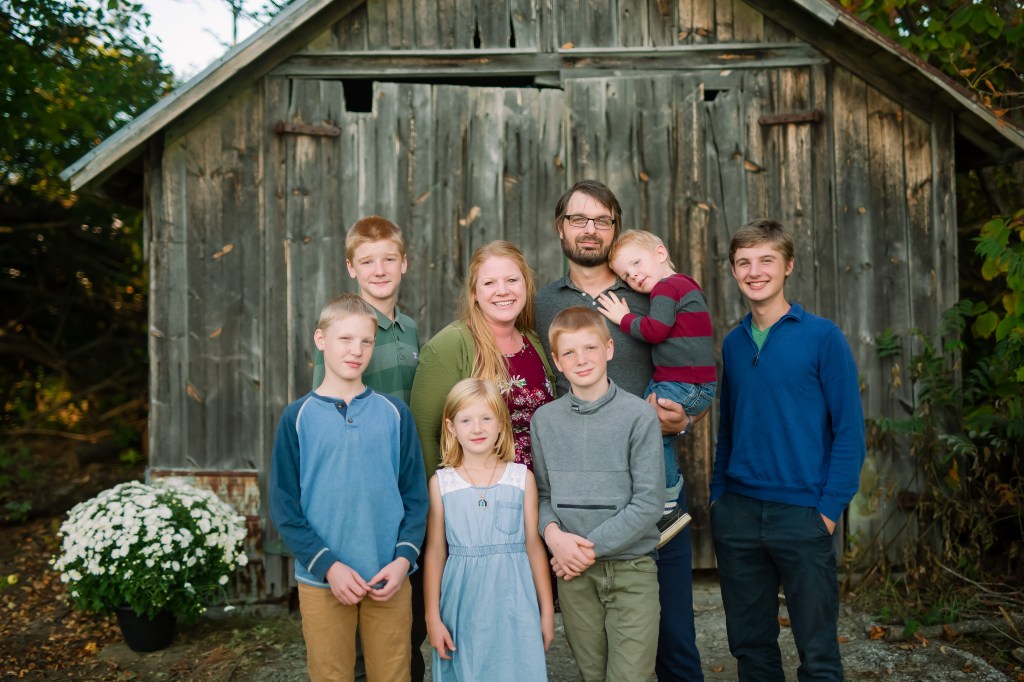
David was raised in Russell, Ontario. He attended the Ottawa and Russell RPC for the majority of his childhood. He spent his elementary years in a small Christian school in Metcalfe and when to High school at Redeemer Christian Highschool, Graduating in 2004. Summers were spend landscaping with his father and working at his uncle’s Market Garden. After a year at Carleton university and a semester at University of Waterloo he left to continue his residential construction company, marry the girl of his dreams and start a family. David and Katie wed in September of 2007 and welcomed the first of their six children (5 boys and 1 little lady) in September of the following year.
David continues to operate his construction company, drafting in the boys as they mature, while Katie faithfully educates their children at home and serves in various ministries. David and Katie began attending Evergreen Bible Chapel at the end of 2021. On June 15, 2025 David was elected as an elder at Evergreen Bible Chapel. He desires to serve the Lord faithfully at Evergreen.
Our Ministries
Sunday Morning Worship Service
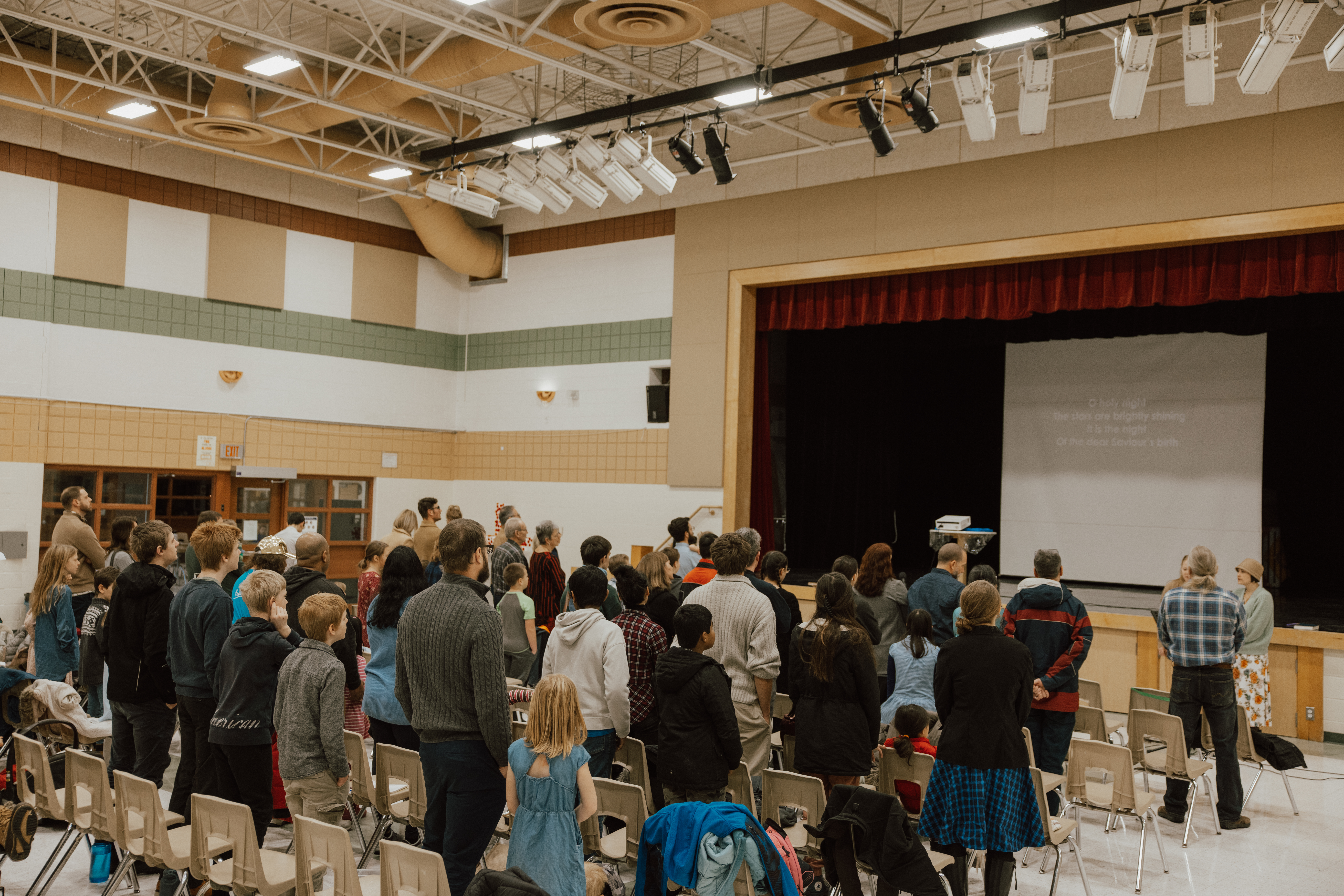
We are reminded in Scripture that we are not to neglect the gathering of the saints (Heb 10:25). The example of the early church is to come together for worship on the Lord’s Day (Acts 20:7, 1 Cor 16:2). On Sunday mornings, we join together in singing, prayer, preaching God’s Word, fellowship, and the ordinances of the church (the first Sunday of the week we partake of the Lord’s Supper).
Time: 10:00 AM Sunday
Location: Changes depending on building availablilty. Click here for this Sunday’s location.
Small Groups
The call of the Christian is to be faithfully following Christ not just on Sunday’s but every day at all times (1 Cor 10:31). Small groups are a great way for Christians to grow in their maturity in Christ. In small groups we study God’s Word, pray for one another, fellowship with one another, and carry one another’s burdens (Acts 2:42).
Tuesday, Wednesday, and Thursday evenings.
Location: Contact for info!
Prayer Meeting
A New Testament church is a church that understands it’s need for prayer. A church that doesn’t pray doesn’t grow or honour the Lord. Come and join us as we lift up our needs and requests to the Lord.
First Wednesday of the month at 7 PM
Location: Contact for info!
Sunday School
We value the importance of teaching our children the truths of Scripture (Deut 6:7). One of the many ways we do that is through our Sunday school ministry, which meets before the service at 9:20am for a time of studying God’s word, learning the catechism, memorizing scripture, and singing songs. It is available for ages 2-16.
Time: 9:20 AM Sunday
Location: Changes depending on building availablilty. Click here for this Sunday’s location.
Youth Group
We recognize the importance of equipping our young men and women to love and serve Christ in this world (Eph 4:12). Our youth group meets for the purpose of training them in the truths of the gospel, to increase their desire and opportunity to serve and put their faith into action, and to build godly relationships. Our youth group runs from ages 12-18.
Location & Dates: Contact for info!
Men’s & Ladies Bible Study
Men and women are called to encourage, rebuke, and instruct one another in the faith (Prov 27:17, 2 Tim 2:2, Titus 2:3-5). The men and women gather every other week (alternate each week) to study a book and spend time in prayer with one another.
Alternating Monday Evenings
Location: Contact for info!
Young Adults
We want to foster growing into maturity in Christ as we grow into physical maturity. We gather as young men and women from ages about 18-30 once a month to grow in relationship with our peers and our Lord.
Friday or Saturday evening of the First Weekend of the month
Location & Dates: Contact for info!
New Here?
We are so glad you are here and looking into Evergreen Bible Chapel! Whether you are searching for a new church or looking to join a church for the very first time, we trust that you will find Evergreen to be an inviting place where you can comfortably come and learn about God’s word, His love, and His Son, Jesus Christ. We look forward to meeting you!
Here are some answers to common questions about our church.
When and where do we meet?
We meet every Sunday morning at 10:00am for worship. During the school year, most of our meetings are in the Cafetorium of Smiths Falls DCI (299 Percy St, Smiths Falls)*. We update our location on this page of this site whenever we’re not in the Cafetorium. Feel free to show up early and stay late to socialize and get to know us.
Services usually last around 90 minutes, finishing around 11:30. On the first Sunday of the month we celebrate the Lord’s Supper (Communion/Eucharist) and have a Fellowship Meal (potluck lunch) after the service.
* The “Apple Maps” app often takes people to the wrong address. The school we meet at is behind the Food Basics. “Google Maps” has also pinned our location to an old meeting spot so feel free to call us if you need help finding us.
What to wear:
We encourage everyone to wear whatever you feel appropriately comfortable in. Most people attending Evergreen would be in what you would likely call “Business casual”, ranging from jeans to a suit and tie.
Children:
Evergreen is FULL of children. Before our service, between 9:20 and 10:00 AM, we have Sunday School classes for children ages 2-18 in the library. The children then come down and join their parents for our 10:00 AM worship service.
We understand that children may have issues remaining still and quiet during the service. We are VERY used to that at Evergreen, so do NOT WORRY about being an annoyance to anyone. We prioritize having our children in the service and understand that it takes time for children to learn to sit still and keep quiet. Many parents will bring books, colouring, or other quiet activities for their young children. We also provide some activities at the back of the hall if needed. It is a common occurrence for parents to be taking their children in an out of the sanctuary, or to the back, so don’t ever feel like you are disrupting by parenting your children!
 Evergreen Bible Chapel